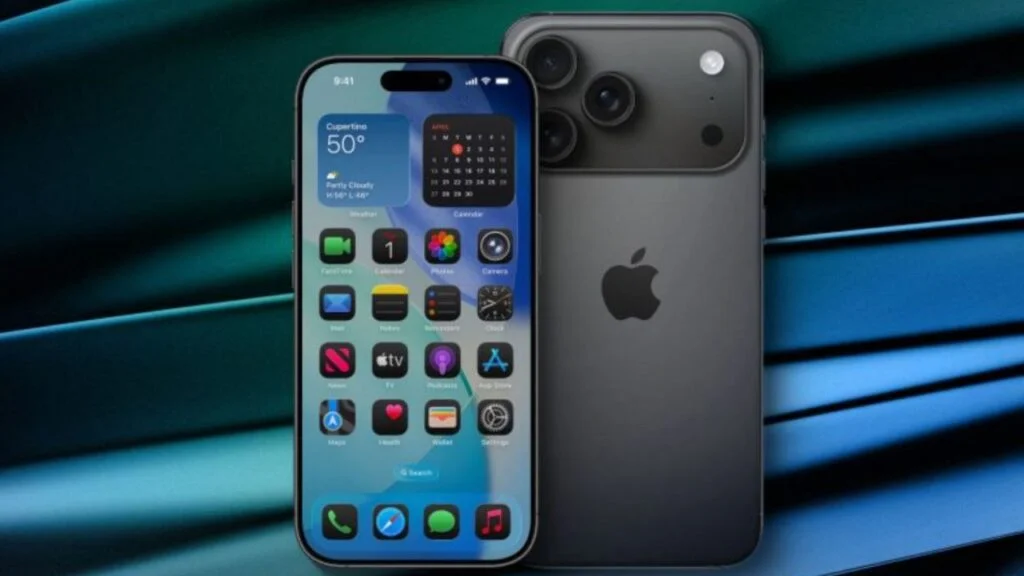
iPhone 17 Shocking Leaks : The tech world is exploding with excitement as new leaks surrounding the upcoming iPhone 17 have surfaced online, revealing three mind-blowing features that could redefine smartphone innovation in 2025. Apple’s legacy of innovation continues to evolve every year, but this time, the company seems to be taking an even bolder step with design, performance, and AI-driven technology.
These early leaks—not yet officially confirmed by Apple—are creating massive buzz among fans, analysts, and tech experts worldwide. Based on trusted industry insiders and leaked prototypes, here are the three game-changing features that could make the iPhone 17 one of the most revolutionary devices in Apple’s history.
- Ultra-Thin Design with Titanium Fusion Frame
Apple is reportedly working on an ultra-thin form factor for the iPhone 17, making it the sleekest and lightest iPhone ever released. The device is expected to feature a new Titanium Fusion Frame, an improved version of the titanium build used in the iPhone 15 Pro series.
This upgraded frame will not only make the phone lighter but also more durable, scratch-resistant, and premium-looking. The iPhone 17 may also introduce slimmer bezels and a redesigned rear camera module for a more seamless and futuristic appearance. Tech analysts suggest Apple wants to push the boundaries of minimalistic design while maintaining strength and structural integrity.
If this leak turns out to be true, the iPhone 17 could easily become the most stylish flagship of 2025.
- Invisible “Under-Display” Face ID – A Massive Upgrade That Shocked Everyone
The most surprising leak—and the one shocking users—is the possibility of an under-display Face ID system, making the dynamic island or notch completely disappear. Apple has reportedly been testing this technology for years, and the iPhone 17 could finally be the first model to implement it successfully.
This means the entire front screen may remain bezel-less, uninterrupted, and free of any cutouts, giving users a true full-view display experience for gaming, streaming, and browsing.
The invisible Face ID system would combine:
- Infrared sensors
- Dot projector
- Camera modules hidden beneath the OLED display
This is one of the most advanced display engineering feats ever attempted in smartphones—and if Apple pulls it off, it would set a new benchmark for all future flagship devices.
- AI-Powered A19 Bionic Chip – Smartest Processor Ever in an iPhone
The iPhone 17 is also rumored to feature Apple’s next-generation A19 Bionic chip, built with a highly efficient 2nm architecture. According to reports, this new processor is designed specifically to boost AI and machine learning performance to a whole new level.
The chip may introduce:
- Real-time AI-enhanced photography
- Smarter Siri with offline capabilities
- AI-assisted battery optimization
- Ultra-fast neural processing
- Seamless AR/VR experiences
Apple is expected to take a major leap with on-device AI, reducing dependency on cloud computing while improving speed, privacy, and efficiency. The A19 Bionic could make the iPhone 17 the most intelligent iPhone ever created.
Expected Launch Timeline & Price Outlook
If Apple follows its usual schedule, the iPhone 17 lineup should launch in September 2025. Pricing will likely remain similar to the current iPhone Pro series, although upgraded features may push the Pro Max variants slightly higher. More leaks and renders are expected to appear in the coming months, offering clearer insights into the device’s final design and hardware.
Conclusion
The iPhone 17 is shaping up to be Apple’s most ambitious smartphone yet. From its ultra-thin titanium design to the shockingly advanced under-display Face ID system and the AI-driven A19 Bionic chip, the device promises to bring the next phase of smartphone evolution. Although these details are based on leaks, they paint an exciting picture of what Apple might deliver in 2025.
If even half of these features become reality, the iPhone 17 could easily dominate the global tech market and set the standard for future smartphones.